
Your First Visit
What to expect and how care usually unfolds
Your first visit is designed to be clear, comfortable, and focused on helping your body move and feel better.
This page explains how to prepare, what happens during your visit, how care is often structured, and what people commonly notice afterward.
Before You Arrive
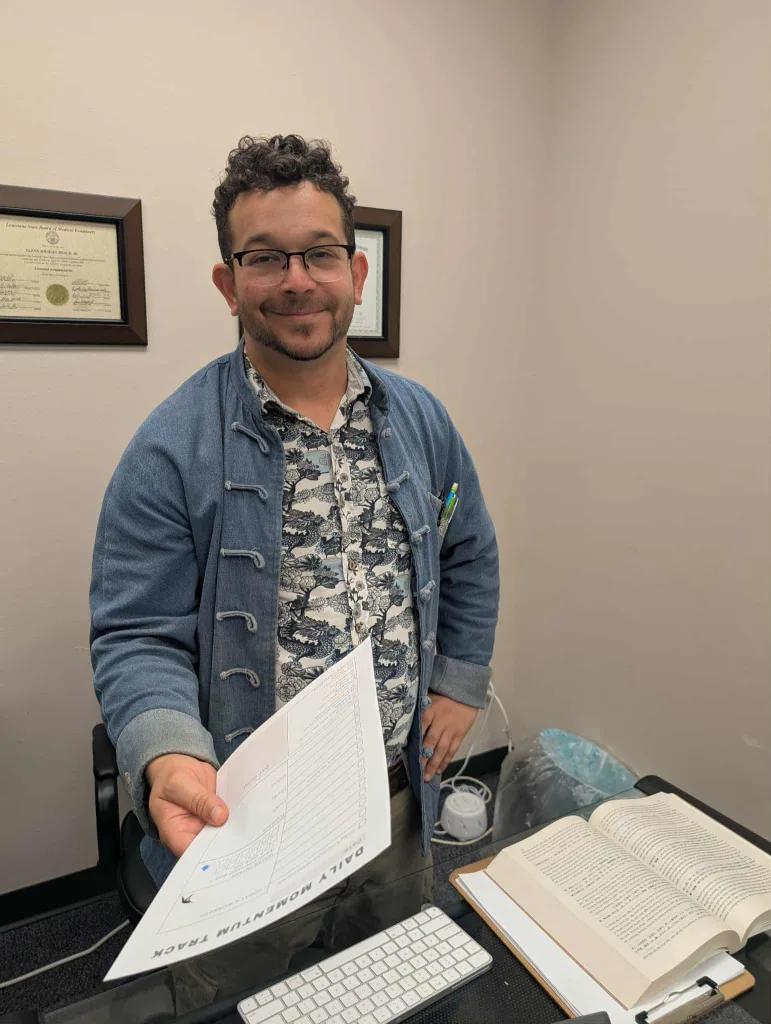
Intake & Consent Forms
Please complete your intake forms before your appointment.
There are two consent forms that must also be completed before we begin treatment once you enter the office.
Completing these ahead of time allows us to review your information and use your visit for care, not paperwork.
If forms are not completed before arrival, treatment time may be reduced.
What to Wear
Wear comfortable clothing that allows movement.
Helpful tips:
- Athletic or casual clothing works best
- Shorts are helpful for hip, leg, or knee concerns
- A loose shirt or tank top is helpful for neck or shoulder work
- You may wear or bring a change of clothes for treatment
You will remain appropriately covered throughout treatment.
Eating & Hydration
- Eat normally before your visit
- Avoid arriving very hungry or overly full
- Drink water before and after
- Limit caffeine, especially if you are sensitive to it
Arrival & Location
Please arrive about 5-10 minutes early so you have time to settle in.
Clinic Address
4300 S I-10 Service Road West, Suite 208
Metairie, LA 70001
The clinic is located within the 1st Lake Commercial Building.
If you have trouble finding the office, feel free to call or text 504-650-0027
Parking
Ample free parking is available in front of the building.
Bathrooms
Bathrooms are located on each floor of the building.
A key is available on the wall within the office if you need to use it.
I will normally ask if you need to use the bathroom before we begin.
What Your First Visit Includes
Your first visit includes both assessment and treatment.
We will:
- Review your main concerns, goals, and medical history
- Assess mobility and strength to isolate your concern
- Perform hands-on treatment based on assessment findings
- Reassessment after treatment
- Supplemental techniques as needed (cupping, manual therapy, herbal treatments)
- Talk through clear next steps after treatment
Care is guided by how your body is functioning, not just where symptoms show up.
How Care Is Structured
Care is divided into two main categories:
Recovery Care
- Feel Right: Stabilization
- Move Free: Rebuild & Strengthen
Maintenance Care
- Live Easy: Maintenance as needed for individual care
Frequency is based on clinical presentation and how your body responds. The timeframes below reflect what is typical during the initial evaluation period.
Recovery Care
Phase 1: Feel Right
Stabilization & Control
Patients are normally in this phase when symptoms are
- Acute
- Flaring
- Limiting activity
- Recurrent or unpredictable
Typical starting frequency:
2 visits per week for pain that has been ongoing and persistent
Patients normally start feeling mobility, strength, or pain changes within the first few visits or first visit
Typical evaluation period:
About 3 weeks
This allows us to:
- Reduce pain and irritation
- Calm the nervous system
- Decrease muscle guarding
- Improve early activation patterns
- Establish a clear and measurable response to care
Visits are closer together during this period to build momentum and accurately assess how your body adapts. Closer spacing early on can also help regulate inflammation and support the body’s natural pain-modulating mechanisms.
Some patients may need slightly more or less frequency depending on severity and recovery response.
Phase 2: Move Free
Rebuild and Strengthen
Symptoms are stable and predictable, we shift focus toward strengthening and durability. Pain guarding is normally greatly reduced along with mobility and strength testing much closer to ideal ranges of motion.
Typical frequency:
Once per week
Goals:
- Stabilize improvements
- Strengthen supportive muscle patterns
- Improve coordination
- Reduce flare frequency
- Increase tolerance to activity
Visits are spaced out as your body demonstrates it can hold changes longer between sessions.
Recovery Care concludes when symptoms are stable and your body consistently maintains progress.
Phase 3: Live Easy
Maintenance Care
Maintenance begins once pain is predictable and movement is resilient.
Frequency varies based on:
- Work stress
- Training demands
- Travel
- Injury history
Maintenance is proactive. It helps prevent small issues from becoming larger setbacks.
How We Track Progress
Progress is not just based on pain being “on or off.”
Pain often changes in stages. In many cases, the body begins to function better before pain fully goes away. Because of this, something may feel “the same” overall while meaningful changes are happening underneath.
To stay accurate, we track progress using several clear markers, not just one.
What We Look At
We pay attention to:
- Changes in pain or symptoms, including intensity, location, or quality
- Improvements in movement, strength, or muscle tension
- How long results last between visits
- How your body responds during and after treatment
We also use everyday function as real-world metrics:
- Activities: If an activity once caused pain and later does not, that is improvement
- Sleep quality: Better sleep supports daily healing and recovery
- Medication use: Needing less medication, or using it less often, is also a sign of progress
Why This Matters
If we only ask, “Does it still hurt?” we miss important information.
Progress may show up as:
- Pain covering a smaller area
- Discomfort starting later in the day
- Easier movement or strength even if pain is still present
- Faster recovery after activity
- Better sleep or less reliance on medication
These changes help guide care, even if pain has not fully resolved yet.
If something feels “about the same,” it helps to look at what is different, even in small ways. Those details help us decide when to stay the course, adjust treatment, or change phases of care.
You do not need perfect answers. Honest and simple observations are enough.
If you are unsure whether something counts as progress, mention it anyway. We’ll sort through it together.
Acupuncture at Big Easy Acupuncture
Acupuncture sessions are hands-on, anatomy-based, and results-focused.
You can expect:
- A detailed assessment
- Targeted acupuncture based on your response
- Manual therapy, electro-acupuncture, cupping, or gua-sha when needed
- Simple guidance to support progress between visits
Treatments are done while you remain clothed. Shorts and a loose shirt or tank top work best.
First visits last up to 45-60 minutes.
Follow-up visits last 30-45 minutes.
Some treatments will be very active and some will place you in positions for periods of time. You will rest comfortably while the needles are in place for about 10–20 minutes. A call button is always available if you need anything.
After Your Visit
It is possible to notice:
- Mild soreness, bruising, or fatigue in treated areas
- Feeling relaxed or energized
- Changes in movement or symptoms over the next 24 – 48 hours
Sometimes people notice changes in areas we did not treat directly. This is a normal response as the body adjusts.
These effects usually settle within a day or two. Sharing what you notice helps guide future care.
If you have questions after your visit, feel free to reach out.
For severe or concerning symptoms, please seek medical care promptly.
Your Role Between Visits
Between visits, it helps to:
- Notice changes in how your body feels or moves
- Follow simple guidance when given
- Perform the recommended exercises and lifestyle changes
- Avoid pushing through pain when possible but perform comfortable stretching
You do not need to be perfect. Noticing patterns is more important than doing everything right.
Who This Care Is a Good Fit For
This care tends to work best for people who:
- Want to understand what is driving their symptoms
- Are open to hands-on, movement-based treatment
- Value clear communication and honest feedback
- Are willing to notice and share how their body responds
- This approach works especially well for people who want to stay active, independent, and informed about their body.
If you are looking for a quick fix without assessment, this may not be the right fit.
Common First Visit Questions
Do acupuncture needles hurt?
Most people feel very little. You may feel a slight pinch upon insertion but once inserted the needle should feel comfortable.
Will I need ongoing care?
Some people feel better quickly. Others benefit from structured care over time. We decide together based on your response.
What if I feel sore after treatment?
Mild soreness or fatigue can happen and usually settles within a day or two.
Have more questions?
You can visit our full FAQ page or reach out anytime.
→ Read our FAQs
Planning Next Steps
After your first visit, I will share:
- What phase your body appears to be in
- What I am seeing during assessment
- What type of schedule often works best
- What signs tell us it may be time to change phases
You always decide how you want to proceed.
The goal is simple:
Feel Right. Move Free. Live Easy.
Ready to Schedule?
You can book online or reach out if you have questions before your first visit.
📞 Call or Text: 504-650-0027
🌐 Book Online: bigeasyacu.janeapp.com
